Aisles. Ads. Algorithms.
Decoding the A to Z of Retail Media and the Gymshark way to community-first brand love!

Brand Bytes & Marketing Musings is Back in Action
After a 10-day pause that felt like a power nap in the marketing world, I’m back, charged and ready to decode a rapidly transforming space. This week, we first demystify the A to Z of Retail Media: a guide for every marketer working with or within retail brands. Whether you're building awareness, optimizing spend, or navigating trade budgets, this is your retail media compass.
A- Attribution
Tracking which ads lead directly to sales. The secret sauce that proves ROI and helps marketers optimize their spend.
B - Basket Data
Real-time info on what shoppers are buying. Vital for targeting and proving ad relevance.
C - Category Leadership
Becoming the go-to brand in your category by dominating search and visibility on retail sites.
D- Demand-Side Platform (DSP)
Retailers’ programmatic ad buying tools that give brands more control and precision.
E - Endemic vs Non-Endemic
Endemic brands sell through the retailer; non-endemics don’t but use retail audiences for marketing.
F - Full-Funnel
Retail media that engages shoppers from awareness to purchase - essential for growth and accountability.
G - Geo-Targeting
Ads tailored by location to boost relevance and drive foot traffic.
H- Halo Effect
Ads for one product that lift sales across the entire brand portfolio.
I - Incrementality
Proving your ads are bringing in new sales, not just preaching to the converted.
J- Joint Business Planning (JBP)
Strategic yearly planning between brands and retailers, with media as a key focus.
K- Keyword Bidding
Competing for top spots in retail search results - a must for high-intent shoppers.
L - Loyalty Data
First-party shopper info that powers smarter segmentation and personalized offers.
M - Media Network (RMN)
Retailer-owned ad platforms combining data, inventory, and scale for targeted campaigns.
N - New-to-Brand
Measuring how many first-time buyers your campaign attracts - crucial for growth.
O - On-site vs Off-site Ads
On-site ads appear on retailer sites; off-site use retailer data to advertise elsewhere.
P - Product Detail Page (PDP)
The key page where shoppers decide to buy - strong content here boosts conversions.
Q - QR Codes
Bridging physical stores and digital ads for interactive campaigns.
R- ROAS (Return on Ad Spend)
The classic metric showing how much revenue your ads generate for every rupee spent.
S - Sponsored Products
Native ads in search results that drive bottom-of-funnel purchases.
T - Trade Budgets
Funds shifting from in-store promotions to digital retail media activations.
U - UPC-Level Targeting
Ultra-precise ads targeted down to the exact barcode or SKU.
V- Viewability
Ensuring ads are actually seen; a must for media accountability.
W - Walled Gardens
Retailers’ closed ad ecosystems rich with data but tricky for cross-platform measurement.
X- X-Channel Tracking
Tracking shoppers across online, offline, mobile, and media touchpoints for a full journey view.
Y - Year-on-Year (YoY) Growth
Retail media’s double-digit growth shows it’s here to stay.
Z - Zero-Party Data
Data shoppers willingly share like preferences and quiz answers - trusted and privacy-friendly.
Gymshark’s Onyx Launch: What Happens When You Mix Hype, Honesty & Community
When Gymshark brought back its iconic Onyx range, it wasn’t just a product drop - it was a brand moment built over years. The whole thing is a great example of how patience, smart storytelling, and putting customers first can create serious buzz.
🔥 Two Years of Build-Up
The original Onyx T-shirt had built a fan following, and then it disappeared. For five years. When Gymshark announced it was coming back, they took their time - two full years - to rework the design, listen to feedback, and get it right.
But what really stood out was how they created excitement without spending big:
Leaked images on Snapchat.
Hints on Reddit.
Athletes teasing it subtly online.
It didn’t feel like a big ad campaign, but it felt like something you discovered if you were part of the community.
📍 Real-World Hype
Pop-up stores in New York, London, and Dubai turned into fan events. Long queues. A superhero-themed setup. Even people who didn’t buy anything wanted the branded bags.
By the time the online launch happened, demand was sky-high, so much so that the website crashed.
🤖 Bots Tried to Ruin It. Gymshark Fought Back.
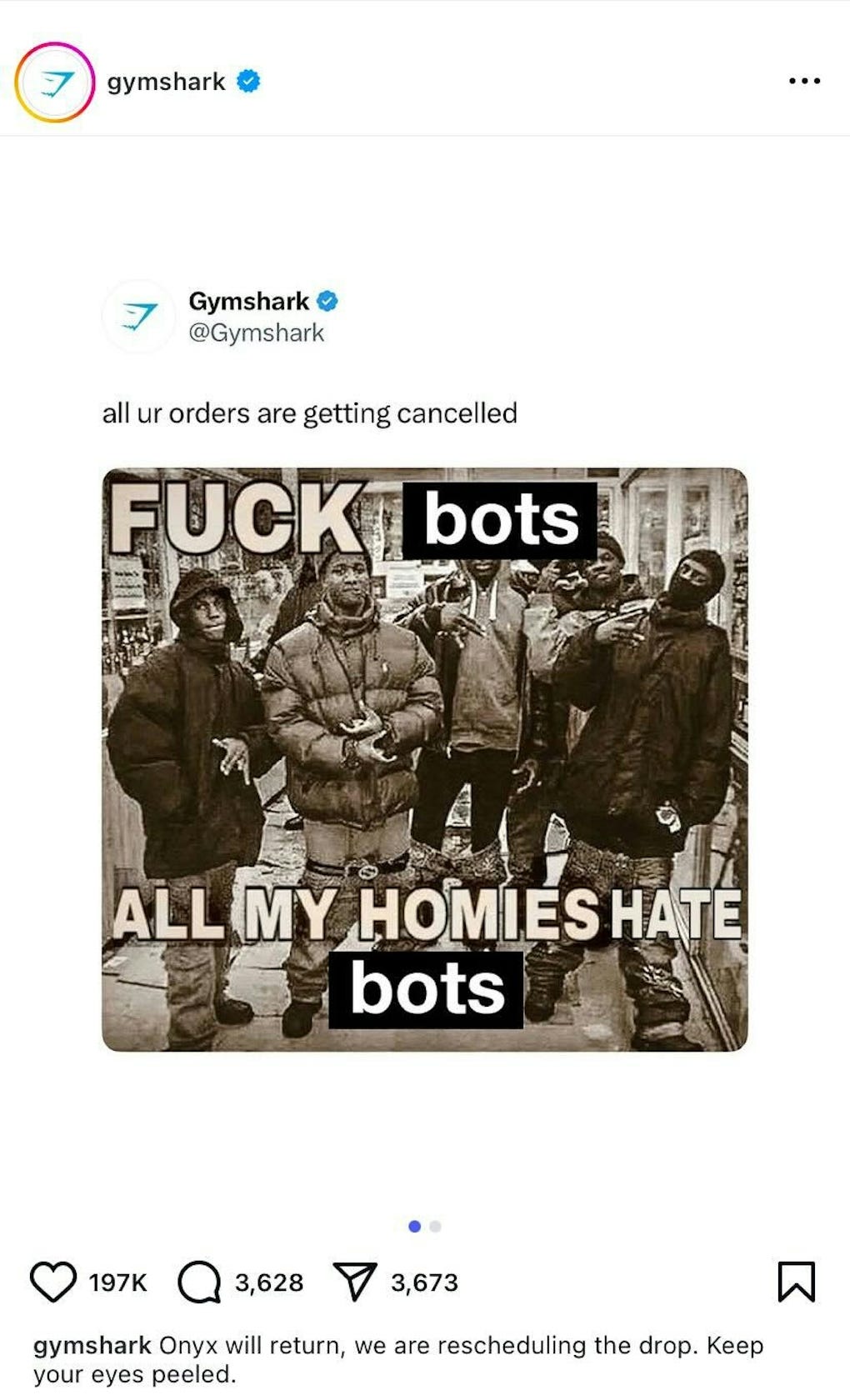
Scalper bots swooped in, placing bulk orders to resell at higher prices. Most brands might have shrugged it off.
Gymshark did the opposite.
They cancelled all suspicious orders, even though it meant losing millions. Then, they talked about it openly on social media, replying to bots with funny comebacks like:
What We Can Learn from This
Hype doesn’t need big money
just smart timing and genuine excitement.
Talk like a real person
Gym Shark’s tone was casual, fun, and honest and it worked.
Doing the right thing matters.
Cancelling those bot orders earned them serious trust.
Every crisis is a chance to build community.
Gymshark didn’t panic - they stayed true to their audience.
You control your brand story
By staying ahead of the conversation, they made sure it stayed positive.
Food for Thought:
As marketers, we’ve become addicted to busyness juggling endless tasks that keep us stuck in the grind. But AI is offering us a rare gift: freedom.
Here’s the real deal: if AI is going to handle the routine writing, posting, and repetitive work, we must step up with both hands to do what truly matters.
That means writing smarter briefs, crafting emotional brand platforms, and fighting harder for creative that not only entertains but sticks in people’s minds. It means deeper diagnosis, sharper strategy, and meaningful impact.
This shift isn’t coming tomorrow. It’s here, now. It’s time to stop pretending this is just another tech trend. Embrace AI, yes but double down on what only humans can do best.
Because if we don’t, relevance will automate right past us.
Like what you read? Subscribe, share, or just send a little love my way!